Table Of Content

5 When Adams became the first American minister to Great Britain in 1785, Mrs. Adams welcomed the changes in style. She observed that English meals were simpler, dress not very important, and English gardens admirable. At their London home on Grosvenor Square, the dining room provided space for 16 at dinner and a library was used by Adams as his office. "As Jefferson was being sworn in on March 4, 1801, John Adams was already on his way back to Massachusetts, where he and Abigail lived out the rest of their days at their family farm," wrote History.com. The first family was not impressed by what WhiteHouse.gov called the "damp, unfinished rooms" of the mansion, built into a still swampy riverside, as workers scurried about to put the final touches on construction. Construction of the executive mansion, in the heart of the newly planned capital District of Columbia, began eight years earlier with the laying of its cornerstone on Oct. 13, 1792.
Who Was the First American President to Live in the White House?
Bidens’ dog, Commander, involved in more White House biting incidents than previously reported - CNN
Bidens’ dog, Commander, involved in more White House biting incidents than previously reported.
Posted: Thu, 05 Oct 2023 07:00:00 GMT [source]
During the Kennedy administration, Rachel Lambert “Bunny” Mellon redesigned the White House gardens, including the famed Rose Garden outside the West Wing. The East Garden, also redesigned by Mellon, was later named in honor of Jacqueline Kennedy. First lady Michelle Obama added a 1,100-square-foot vegetable garden on the south grounds in 2009. The White House’s attic was converted into a third floor during the Coolidge administration, and over the years, it has hosted a music room for President Clinton and a bedroom suite for Melania Trump. There is also a solarium, added by Grace Coolidge, with panoramic views of the Mall.
West Room, North Hall, and East Room
Not until the 1890s did security begin to seal off open access to the White House grounds. The city of Washington DC (District of Columbia) was established on July 16, 1790, with the site chosen by inaugural president George Washington. Designer Pierre Charles L’Enfant created the map for the new city using inspiration from existing European cities like London, Paris, Madrid, and several cities in Italy. At the time, Washington DC was considered the geographic epicenter of the United States, though this would change during the lengthy era of Westward Expansion. The plans included the location for the future White House, the Capitol to house Congress, and the National Mall. The White House has seen several renovations and additions throughout the years, but its original stone walls still stand.
John F. Kennedy (1961–
The West Wing also houses the Situation Room, the Cabinet Room, the Press Room, and offices for advisors and the chief of staff. Additional offices for the president’s staff are located in the Eisenhower Executive Office Building. The vice president has an office in the West Wing, as well as the ceremonial office in the Eisenhower Executive Office Building. In addition to the Presidential Bedroom Suite, the second floor includes historic spaces, such as the Queens’ Bedroom, the Treaty Room, the Yellow Oval Room, the Center Hall, and the East and West Sitting Rooms. The White House has undergone many renovations throughout its history, starting with Thomas Jefferson, who, along with architect Benjamin Henry Latrobe, added the East and West Colonnades, which now link the East and West Wings with the Executive Residence.
Early maps referred to the White House as the “President’s Palace,” but in 1810, the building was officially named “Executive Mansion” in order to avoid any connection to royalty. The residence has also been called “President’s House,” or “President’s Mansion.” In 1901, President Theodore Roosevelt changed the official name to “White House,” a moniker that had been used throughout the 19th century. Beautiful landscaping has graced the White House grounds since the administration of Thomas Jefferson. The South Lawn features over three dozen commemorative trees that date back to the 1870s.
James Monroe (1817–
Following his inauguration in March 1801, Jefferson became the second president to reside in the executive mansion. In keeping with his ardent republicanism, he opened the house to public visitation each morning, a tradition that was continued (during peacetime) by all his successors. He personally drew up landscaping plans and had two earthen mounds installed on the south lawn to remind him of his beloved Virginia Piedmont.
White House Builder James Hoban’s Irish Roots
President Harry S. Truman began a renovation of the building in which everything but the outer walls was dismantled. The reconstruction was overseen by architect Lorenzo Winslow, and in 1952, the Truman family moved back into the White House. In 1842 the visit to the United States of the English novelist Charles Dickens brought an official invitation to the White House. After his calls at the White House door went unanswered, Dickens let himself in and walked through the mansion from room to room on the lower and upper floors. Finally coming upon a room filled with nearly two dozen people, he was shocked and appalled to see many of them spitting on the carpet.
Dickens was not the only foreign visitor to be disappointed with the White House. The interior was redecorated during various presidential administrations and modern conveniences were regularly added, including a refrigerator in 1845, gas lighting in 1849, and electric lighting in 1891. Ever since Theodore Roosevelt moved his workspace from the residence to the newly built West Wing in 1902, the two-story West Wing has been home to the U.S. presidential offices.
James A. Garfield (
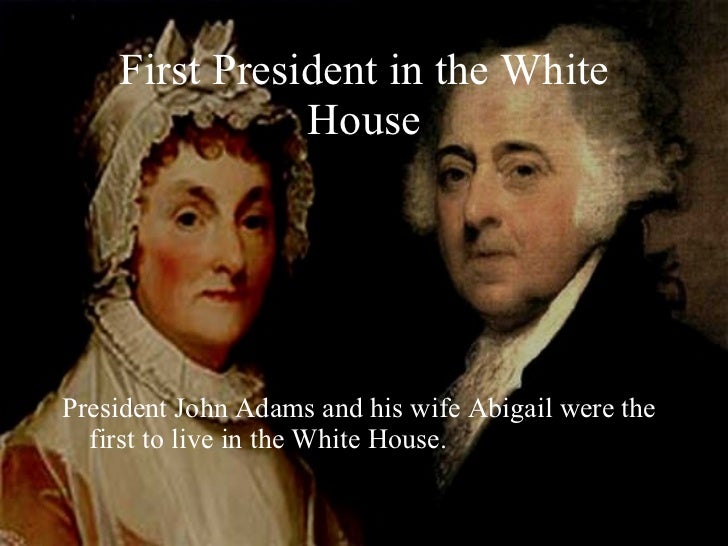
The original architect, Irish-born James Hoban, was appointed to rebuild the house, and President James Monroe and his wife, Elizabeth Kortright, took residence in 1817. The first president, George Washington, chose the location in 1791, but never lived there. John and Abigail Adams had a wealth of experience in establishing and living in official houses prior to their move into the new President's House in Washington, D.C., in 1800. Adams had represented the United States in diplomatic missions to Europe during the Revolution, and in Paris and London in the 1780s when Abigail Adams joined him. However, they resumed a warm and deep long-distance relationship in their later years, each aware they had partnered in an unprecedented achievement in the history of humanity, filled by voluminous mail correspondence.
What the Childhood Homes of US Presidents Looked Like - Business Insider
What the Childhood Homes of US Presidents Looked Like.
Posted: Sun, 18 Feb 2024 08:00:00 GMT [source]
Still, for all the hassles involved — tourists constantly tromping about, snapping pictures — it is an undeniably cool place to call home. (It wasn't built until after Washington, remember, and Grover Cleveland lived there on two different occasions.) It's an enduring symbol of power and freedom. That galling torch-and-run — talk about a Brexit — forced Madison and his wife Dolley into a grand old mansion down the street, the Octagon House, and prompted some discussion on whether to rebuild the White House at all. But it's not as if the president of the United States has to live in the White House. Although with everything there, and a commute like that — the West Wing is a few steps from the main residence — the live-work-play setup has thus far proven impossible to turn down.
Receptions on New Year’s Day and the Fourth of Julycontinued to be held until the early 1930s. Presidents can express their individual style in how they decorate someparts of the house and in how they receive the public during their stay. President Jefferson also opened thehouse for public tours, and it has remained open, except during wartime, eversince.
Although the name “White House” was commonly used from about the same time (because the mansion’s white-gray sandstone contrasted strikingly with the red brick of nearby buildings), it did not become the official name of the building until 1901, when it was adopted by Pres. However, the first president George Washington did not live in the White House. The entire city of Washington DC did not exist in 1789, when Washington took office. Unlike most nations, the United States specifically created a federal city that existed independently, outside of any state, to be the national capital.
John Adams, the Founding Father whose intellect, passion and political philosophy fueled American independence and gave shape to constitutional governments now found around the world, became the first president to live in the White House on this day in history, Nov. 1, 1800. By 1794 the Whiskey Rebellion threatened the stability of the new United States and challenged the authority of the democratically-elected federal government. By the time the militia reached Pittsburgh, the rebels had dispersed and could not be found. Two men, John Mitchell and Philip Weigel, were found guilty of treason, though both were pardoned by President Washington.



No comments:
Post a Comment